

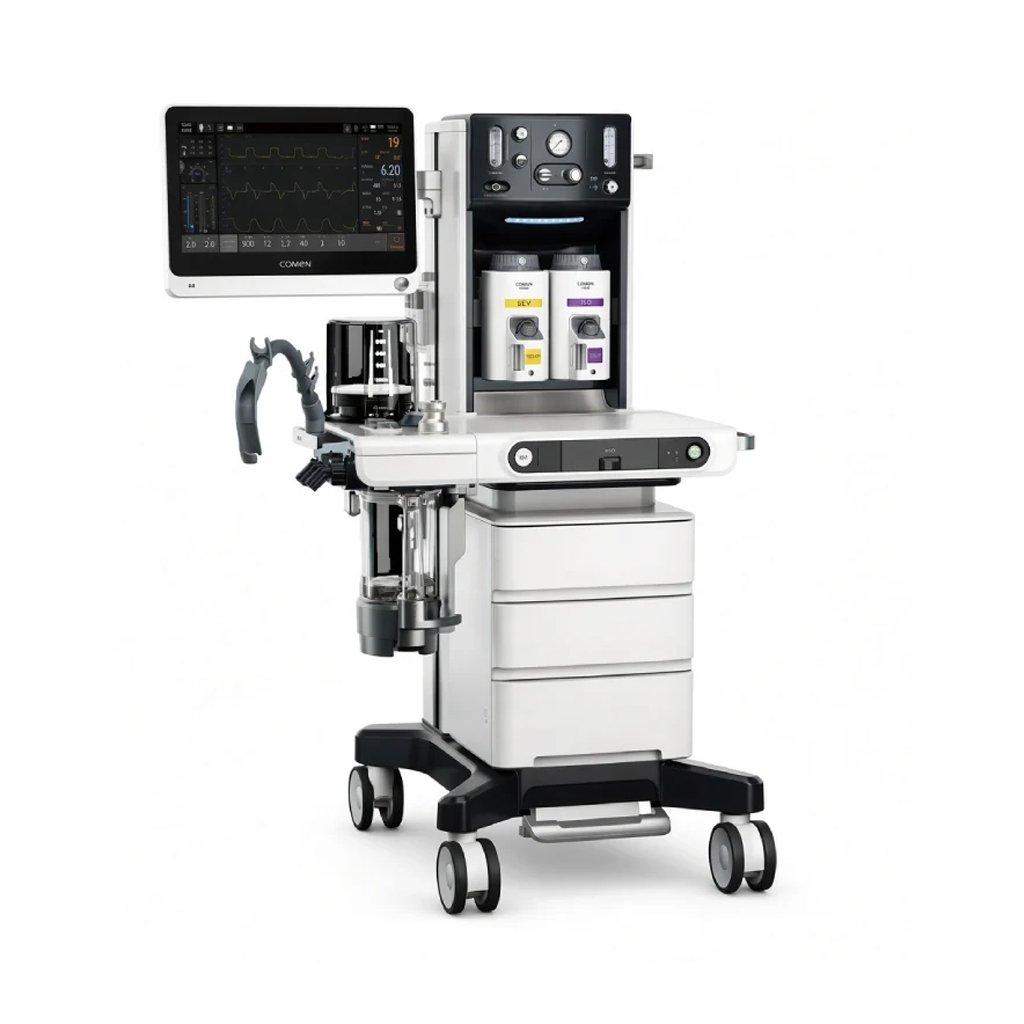
Comprehensive hospital emergency crash cart buyers guide in Kenya. Organization of resuscitation trolleys, defibrillator mounts, and medications.
In a cardiac arrest or acute respiratory failure event, every second counts. An emergency crash cart (resuscitation trolley) is not merely a piece of mobile hospital furniture—it is a mobile life-support workstation engineered to deliver immediate emergency medications, airway intubation tools, and defibrillation within seconds of a Code Blue activation.
An effective emergency crash cart combines standardized color-coded drawer layouts, tamper-evident breakaway security locks, dual-swivel defibrillator shelving, and high-mobility anti-static caster wheels designed for rapid hospital transit.
Standardized Emergency Drawer Architecture
Resuscitation guidelines recommend a logical top-to-bottom drawer layout consistent across all hospital wards so that clinical staff rotating departments encounter an identical setup:
- Top Work Surface: Recessed ABS or stainless-steel work surface with raised perimeter lips to prevent bottles from sliding off; holds the defibrillator, sharps disposal unit, and prep trays.
- Drawer 1 - Immediate Emergency Cardiac Medications: Epinephrine (Adrenaline), Atropine, Amiodarone, Calcium Chloride, Sodium Bicarbonate, Adenosine, Dextrose 50%, and pre-filled emergency syringes with clear medication labels.
- Drawer 2 - Airway & Intubation Equipment: Video/optical laryngoscope sets with various blade sizes (Macintosh and Miller 1–4), endotracheal (ET) tubes ranging from 2.5 to 8.5 mm, stylets, bag-valve-mask (Ambu) resuscitators, oropharyngeal (Guedel) and nasopharyngeal airways, Magill forceps, and ET tube fixation tape.
- Drawer 3 - Vascular Access & IV Therapy: Intravenous cannulas (14G–24G), tourniquets, blood collection tubes, IV infusion sets, blood administration sets, normal saline, Ringer's lactate, and central venous catheterization packs.
- Drawer 4 - Pediatric Resuscitation Suite: Color-coded pediatric resuscitation systems (Broselow tape compatible) containing pediatric-sized airway devices, small-volume syringes, pediatric defibrillation pads, and intraosseous (IO) infusion needles.
- Drawer 5 - Diagnostic & Fluid Reserve: Suction catheters, stomach tubes, thoracic drainage packs, spare normal saline bottles, and adult cardiac arrest recording charts.
Core Hardware Components & Ergonomic Construction
A durable crash cart must withstand heavy hospital impacts and emergency transit demands:
- Anti-Microbial ABS & Steel Construction: High-strength steel or aluminum alloy frame with seamless, impact-resistant ABS molded tops and drawers that resist harsh chemical disinfection and eliminate crevices where blood or bacteria can lodge.
- Tamper-Evident Breakaway Central Lock: Centralized locking mechanism secured by numbered, single-use plastic breakaway seals. This guarantees that drawers remain fully stocked and sterile, alerting staff immediately if the cart has been opened.
- 360-Degree Swivel Defibrillator Shelf: Height-adjustable, 360-degree rotating defibrillator tray with adjustable nylon security straps, enabling the operator to orient the monitor toward the patient from any angle around the bed.
- Integrated CPR Cardiac Backboard: Rigid, lightweight acrylic or composite cardiac compression board mounted externally on the back of the cart, ready for instant placement under the patient's torso on soft mattresses.
- Oxygen Cylinder Mounting Bracket: Secure external rear bracket holding a portable medical oxygen cylinder (Size D or E) with dedicated safety retention straps.
- Medical IV Pole: Telescopic stainless-steel IV pole with 4 hooks, adjustable height, and secure screw locking.
Caster Wheel Specifications for Kenyan Hospital Flooring
Navigating hospital corridors, elevator thresholds, and ramps during a cardiac emergency requires heavy-duty mobility:
- 5-Inch Medical Swivel Casters: High-grade non-marking polyurethane or thermoplastic rubber wheels (minimum 125 mm diameter) with precision sealed ball bearings.
- Dual Total-Lock Braking: At least two diagonal wheels must feature instant-engagement foot brakes that lock both wheel rotation and swivel direction simultaneously, ensuring rock-solid stability during chest compressions.
- Anti-Static Conductive Grounding: Static-dissipative wheel composition that discharges electrostatic electricity safely to hospital floors, preventing static interference with sensitive defibrillators and patient monitors.
Daily Verification & Quality Assurance Protocols
Hospital nursing and biomedical teams must maintain rigorous cart auditing protocols:
- Shift-Change Breakaway Seal Audits: Verifying the integrity and serial number of the breakaway plastic seal at every nursing shift change, recording verification in the Code Blue logbook.
- Monthly Expiry Date & Functionality Audits: Breaking the seal monthly to audit medication expiration dates, check defibrillator battery status, test laryngoscope bulbs, and replace expired items before resealing with a new logged seal.
Frequently Asked Questions (Emergency Crash Carts Kenya)
What is the purpose of the breakaway plastic seal on a crash cart?
The breakaway plastic seal ensures that all emergency drugs and equipment remain 100% complete, unexpired, and untouched. If the seal is intact, the clinical team knows with certainty that the cart is ready for immediate resuscitation without missing components.
What size wheels are best for hospital emergency trolleys?
Medical trolleys should feature 5-inch (125 mm) precision swivel casters with polyurethane tires. Larger wheels roll smoothly over uneven elevator transitions, floor expansion joints, and ward thresholds without tipping delicate equipment.
Where can healthcare facilities in Kenya buy certified emergency crash carts?
Nairobi Enterprises Ltd supplies fully equipped, high-impact ABS and stainless-steel emergency crash carts, complete with defibrillator shelves, oxygen cylinder holders, CPR backboards, and IV poles, delivered across Kenya and East Africa.
Explore Nelent's equipment ↗