Clinical guide to radiant infant warmers and neonatal resuscitation units in Kenya. Optimal nursery workflow, thermal stability, and safety specs.
Neonatal thermal management during the first golden hour of life is one of the most critical determinants of newborn survival, particularly for preterm and low-birth-weight neonates in maternity wards and neonatal nurseries.
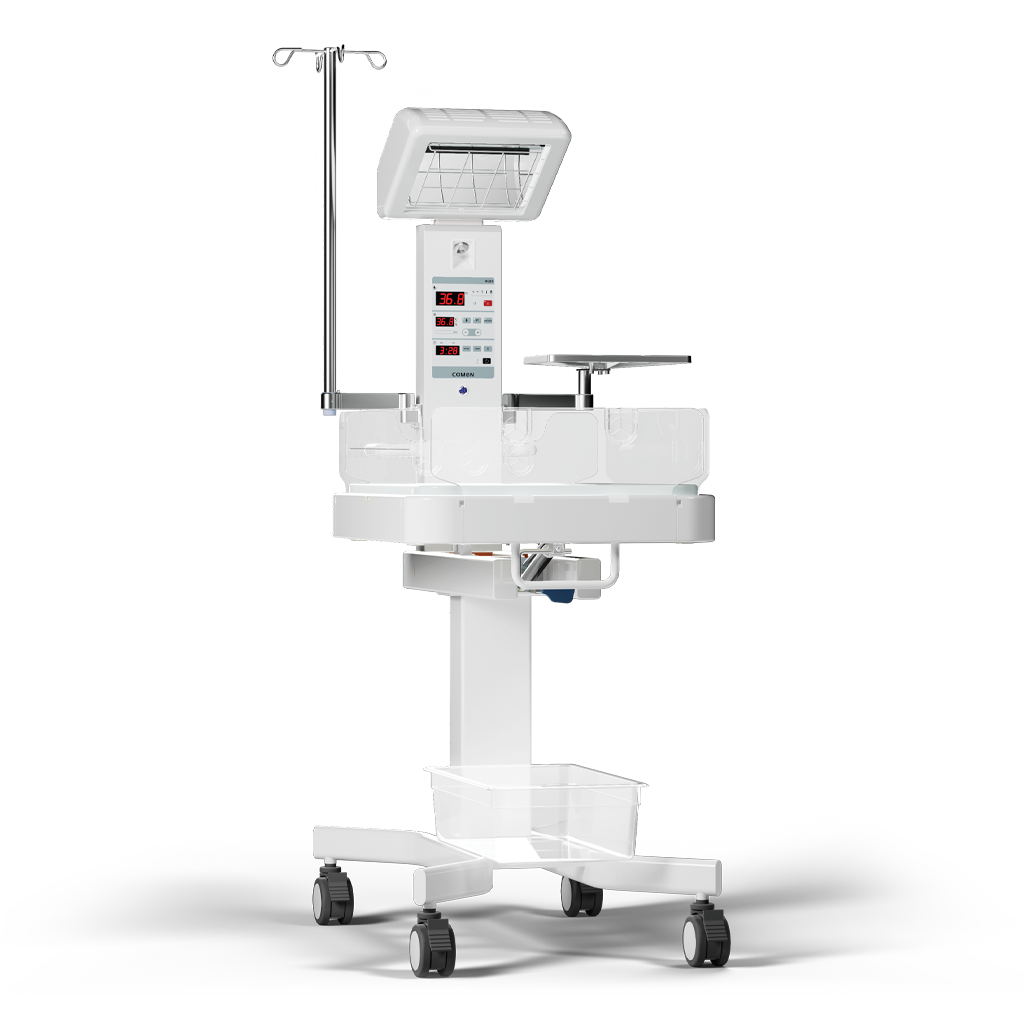
Radiant infant warmers are vital life-saving systems that prevent neonatal hypothermia; successful clinical outcomes require precise skin-servo temperature regulation, integrated APGAR timers, and unobstructed 360-degree resuscitation access.
Preventing Neonatal Cold Stress in East African Delivery Rooms
Newborns possess a high surface-area-to-body-mass ratio, thin skin with minimal subcutaneous fat, and limited metabolic heat production capacity. They lose heat rapidly through four environmental mechanisms:
- Evaporation: Rapid heat loss through wet amniotic fluid on the skin immediately following delivery; requires immediate drying and placement under pre-heated radiant heat.
- Conduction: Direct contact heat transfer to cold surfaces, weighing scales, or unheated mattresses.
- Convection: Heat loss caused by drafts from air conditioning, ceiling fans, or open windows.
- Radiation: Heat loss radiating from the baby's body to colder nearby walls and objects without direct contact.
Preventing cold stress prevents metabolic acidosis, pulmonary vasoconstriction, hypoxia, and hypoglycemia in newborns.
Core Functional Modules of Radiant Warmers
Modern radiant infant warmers combine intelligent thermal control with clinical resuscitation flexibility:
- Overhead Infrared Ceramic/Quartz Heating Element: Delivers uniform radiant energy evenly across the entire mattress surface without dangerous localized hot spots or excessive ultraviolet/visible glare.
- Skin-Servo Temperature Control: Microprocessor-controlled closed-loop feedback system that continuously monitors the neonate's abdominal skin temperature via a sensitive thermistor probe, automatically adjusting heater power output to maintain the set temperature (typically 36.5°C).
- Manual & Pre-Heat Modes: Allows delivery room staff to pre-warm the bassinet prior to birth, ensuring an immediate warm environment upon arrival.
- APGAR & Procedure Timers: Integrated visual and audible timers that alert clinical staff at 1, 5, and 10-minute milestones following birth to record standardized APGAR assessment scores.
Integrated Resuscitation Suites: T-Piece, Suction & Phototherapy
Leading radiant warmers function as complete neonatal emergency resuscitation stations:
- Integrated T-Piece Resuscitation: Built-in clinical gas blenders and T-piece resuscitators (Neopuff compatible) delivering precise Peak Inspiratory Pressure (PIP) and Positive End-Expiratory Pressure (PEEP) to ventilate asphyxiated neonates without the risk of barotrauma from manual bag-valve-mask squeezing.
- Medical Suction Regulators: Low-vacuum, sensitive medical suction units dedicated to gentle neonatal airway clearing of meconium or amniotic fluid.
- Integrated LED Phototherapy: Overhead or under-bed high-intensity blue LED phototherapy lamps (450–470 nm spectrum) for treating neonatal hyperbilirubinemia without needing to transfer the infant away from radiant warming.
Ergonomic Nursery Layout & Infection Prevention
Nursery layout and warmer construction directly influence workflow speed and pathogen suppression:
- 360-Degree Clinical Access: Drop-down or rotating transparent acrylic side panels that provide full, unobstructed bedside access for obstetricians, pediatricians, and neonatal nurses during emergency procedures.
- Smooth Tilting Bassinet: Continuous, smooth Trendelenburg and reverse Trendelenburg bassinet tilting (±15 degrees) for drainage and airway management.
- Seamless Antimicrobial Mattress: Flame-retardant, biocompatible, waterproof memory-foam mattresses with seamless ultrasonic welds that prevent fluid ingress and allow rapid wipe-down disinfection.
Cleaning, Calibration & Daily Safety Checklists
Biomedical protocols to maintain radiant warmer safety:
- Daily Pre-Shift Inspections: Verifying heater element integrity, checking skin temperature probe cabling for cracks or fraying, and testing alarm triggers (probe failure, high/low skin temperature deviation alarms).
- Calibration Benchmarks: Biannual testing of radiant surface temperature uniformity, heater cutoff thermostats (ensuring power cuts off before surface exceeds safe physiological limits), and electrical earth leakage testing.
Frequently Asked Questions (Infant Warmers Kenya)
What is the difference between an infant radiant warmer and an infant incubator?
A radiant infant warmer provides open, overhead thermal warmth with complete, unobstructed physical access to the infant, making it essential for delivery rooms, resuscitation, and procedures. An incubator is a closed, enclosed micro-environment that provides both temperature and humidity control, designed for long-term care of preterm neonates in the NICU.
How does servo-control mode protect the newborn?
In servo-control mode, a sensitive skin probe is attached to the neonate's abdomen. The warmer's computer continuously reads the baby's actual skin temperature and automatically modulates heating power up or down to keep the infant at the target setpoint (36.5°C), preventing both hypothermia and accidental hyperthermia.
Where can hospitals in Kenya procure certified neonatal radiant warmers?
Nairobi Enterprises Ltd supplies certified radiant warmers, baby incubators, phototherapy units, and neonatal resuscitation consumables to public and private maternity hospitals across Kenya, backed by full installation, clinical user training, and local engineering warranties.
Explore Nelent's equipment ↗