Comprehensive guide to planning, zoning, and outfitting specialized Neonatal Intensive Care Units (NICU) and Special Care Baby Units (SCBU) across healthcare facilities in Kenya.
Newborn and preterm infant survival represents a cornerstone of Kenya's reproductive, maternal, newborn, child, and adolescent health (RMNCAH) strategy. Creating an effective neonatal care environment requires a delicate balance of acoustic control, micro-climate stabilization, infection control, and rapid resuscitation capability.
A modern NICU requires clear spatial separation between isolation cubicles, step-down nursery areas, and high-dependency pods—equipped with dual-walled neonatal incubators, intensive phototherapy, and dedicated micro-infusion syringe pumps.
NICU Spatial Planning & Bed Capacity Benchmarks
International neonatal architectural standards recommend specific spatial allocations per neonatal bed to enable sterile barrier nursing and emergency team intervention:
- Intensive Care Pods (Level III): Minimum of 10 to 12 square meters per incubator cot, with clear 360-degree perimeter clearance of at least 1.5 meters around each bed for resuscitation teams, transport incubators, and mobile X-ray equipment.
- Intermediate / Step-Down Care (Level II): 6 to 8 square meters per cot, facilitating transition from incubator to open crib care.
- Kangaroo Mother Care (KMC) Rooms: Dedicated, quiet rooms equipped with supportive reclining chairs where mothers provide skin-to-skin thermal care, breastfeeding support, and maternal-infant bonding.
- Milk Preparation & Aseptic Storage: Separate, sterile clean room dedicated to breast milk expression, pasteurization, aseptic formula preparation, and medical refrigeration at 2°C–4°C with digital temperature logging.
Incubator vs Radiant Warmer Allocation Strategy
Selecting the right thermal environment depends on infant gestational age, birth weight, and clinical stability:
- Double-Wall Neonatal Incubators: Essential for very-low-birth-weight (<1,500g) and extremely-low-birth-weight (<1,000g) preterm infants. The dual-wall construction prevents radiative heat loss, while servo-controlled humidification (up to 95% relative humidity) prevents trans-epidermal water loss and skin dehydration.
- Open Radiant Infant Warmers: Positioned in initial reception, admission triage, and high-intervention procedure bays where continuous physical access for catheterization, intubation, and central line placement is paramount.
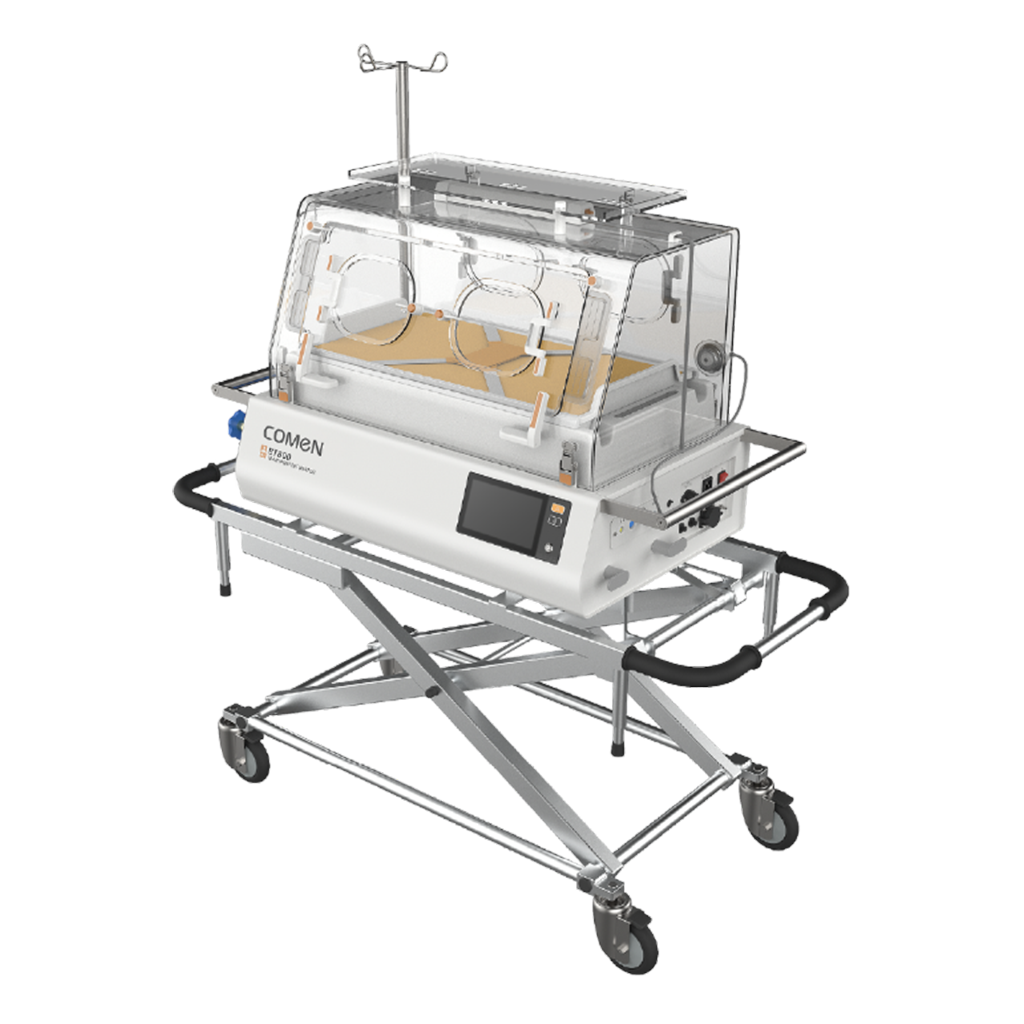
- Transport Incubators: Mobile units equipped with independent internal oxygen cylinders, rechargeable 3-hour battery power, anti-vibration suspension, and auxiliary baby monitors for safe ambulance transfer between county hospitals.
Essential Neonatal Life-Support Technologies
Outfitting a high-dependency neonatal care unit requires specialized micro-technologies designed specifically for tiny physiological volumes:
- Bubble CPAP (Continuous Positive Airway Pressure): The clinical gold standard for non-invasive respiratory support in neonates with respiratory distress syndrome (RDS). Bubble CPAP delivers warm, humidified oxygen-air blends with fluid oscillation that recruits alveoli and stimulates lung development.
- Micro-Infusion Syringe Pumps: Ultra-precise syringe infusion pumps capable of delivering critical inotropes, total parenteral nutrition (TPN), and intravenous medications at micro-rates as low as 0.1 mL/hr with accurate occlusion pressure detection.
- Intensive LED Phototherapy Units: High-radiance narrow-spectrum blue LED systems (peak wavelength 450–470 nm) providing irradiance levels of 30–50 µW/cm²/nm over a wide surface area for rapid serum bilirubin reduction in neonatal jaundice without excessive thermal heating.
- Transcutaneous Bilirubinometers (TcB): Non-invasive optical screening tools that assess neonatal jaundice transcutaneously on the forehead or sternum, minimizing painful heel-sticks and laboratory blood draws.
Electrical Redundancy, Oxygen Blending & Thermal Stability
Neonates are uniquely vulnerable to sudden environmental changes:
- Air-Oxygen Blending: Neonatal supplemental oxygen must never be delivered as pure 100% unblended oxygen due to the severe risks of retinopathy of prematurity (ROP) and bronchopulmonary dysplasia. Precision blenders allowing FiO2 titration between 21% and 100% with integrated oxygen analyzers are essential.
- Isolated Electrical Circuits: Uninterruptible power supply (UPS) backups powering every incubator and ventilator to prevent abrupt temperature drops during municipal outages.
- Acoustic & Lighting Management: Controlling ambient sound levels below 45 decibels (dB) with sound-dampening acoustic ceiling tiles and dimmer-controlled circadian lighting to replicate intrauterine tranquility and support neuro-development.
Infection Control & Nurse-to-Patient Ergonomics
Infection prevention is the single most important factor determining neonatal survival rates:
- Hand Hygiene Infrastructure: Dedicated scrub sinks with touchless sensor or elbow-operated faucets, automated antiseptic soap dispensers, and alcohol-based hand rub points at every individual cot entrance.
- Strict Gowning & Shoe-Cover Zones: Controlled clean airlocks that prevent contamination from outside ward corridors.
- Disinfection Turnaround: Seamless incubator surfaces without crevices, allowing thorough disinfection between admissions using non-toxic, non-corrosive hospital-grade surface disinfectants.
Frequently Asked Questions (NICU Setup in Kenya)
What is the recommended nurse-to-patient ratio for a Level III NICU in Kenya?
For critically ill ventilated or unstable neonates in Level III intensive care, the recommended ratio is 1:1 or 1:2. For stable intermediate care infants, 1:3 to 1:4 is acceptable. Maintaining adequate clinical staffing is essential for rapid response to apnea alarms.
Why is medical air-oxygen blending critical in neonatal units?
Administering uncontrolled high-concentration oxygen to premature infants damages developing retinal blood vessels, potentially causing permanent blindness through Retinopathy of Prematurity (ROP). An air-oxygen blender precisely titrates the fraction of inspired oxygen (FiO2) down to exact physiological target saturations (typically 90%–94%).
Where can healthcare facilities procure complete NICU equipment packages in Kenya?
Nairobi Enterprises Ltd supplies turnkey neonatal healthcare equipment, including incubators, infant warmers, bubble CPAP machines, LED phototherapy lights, and syringe pumps, backed by full clinical engineering installation and staff training throughout Kenya.
Explore Nelent's equipment ↗