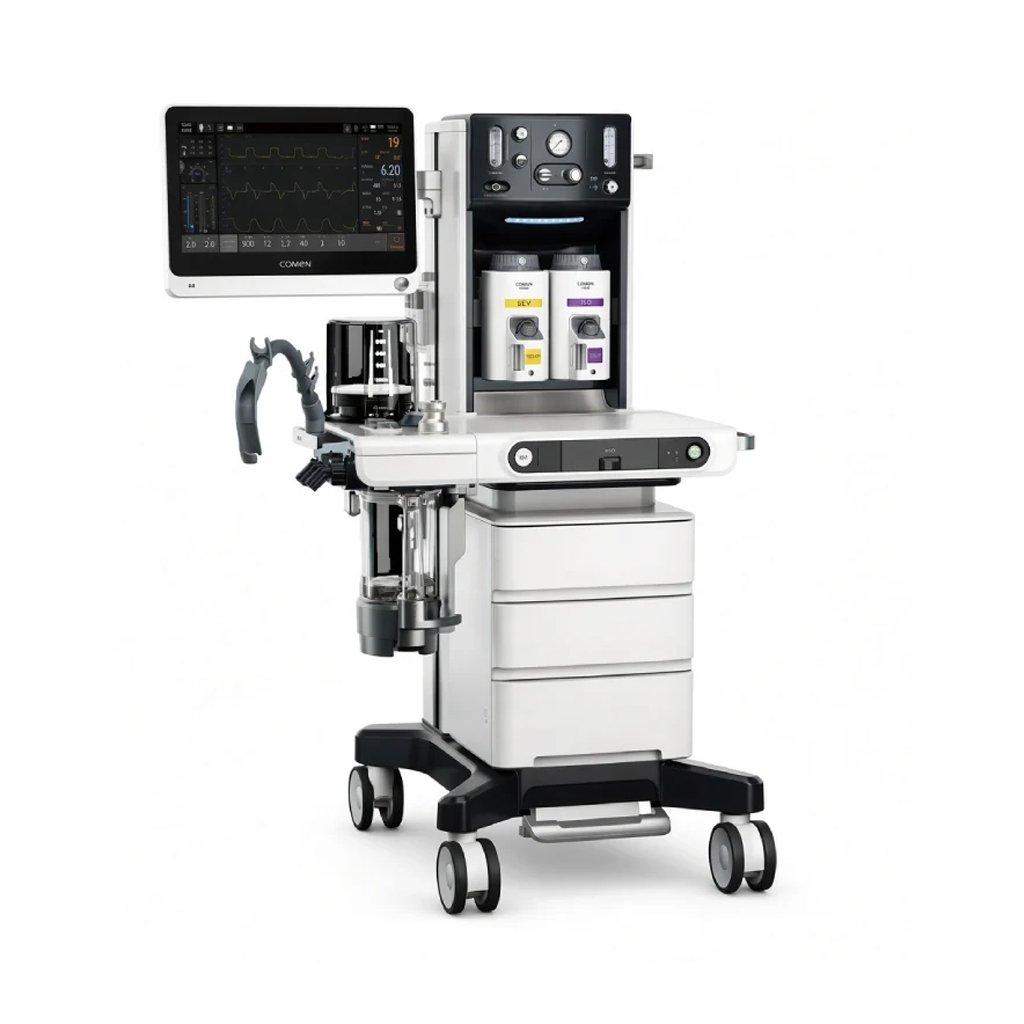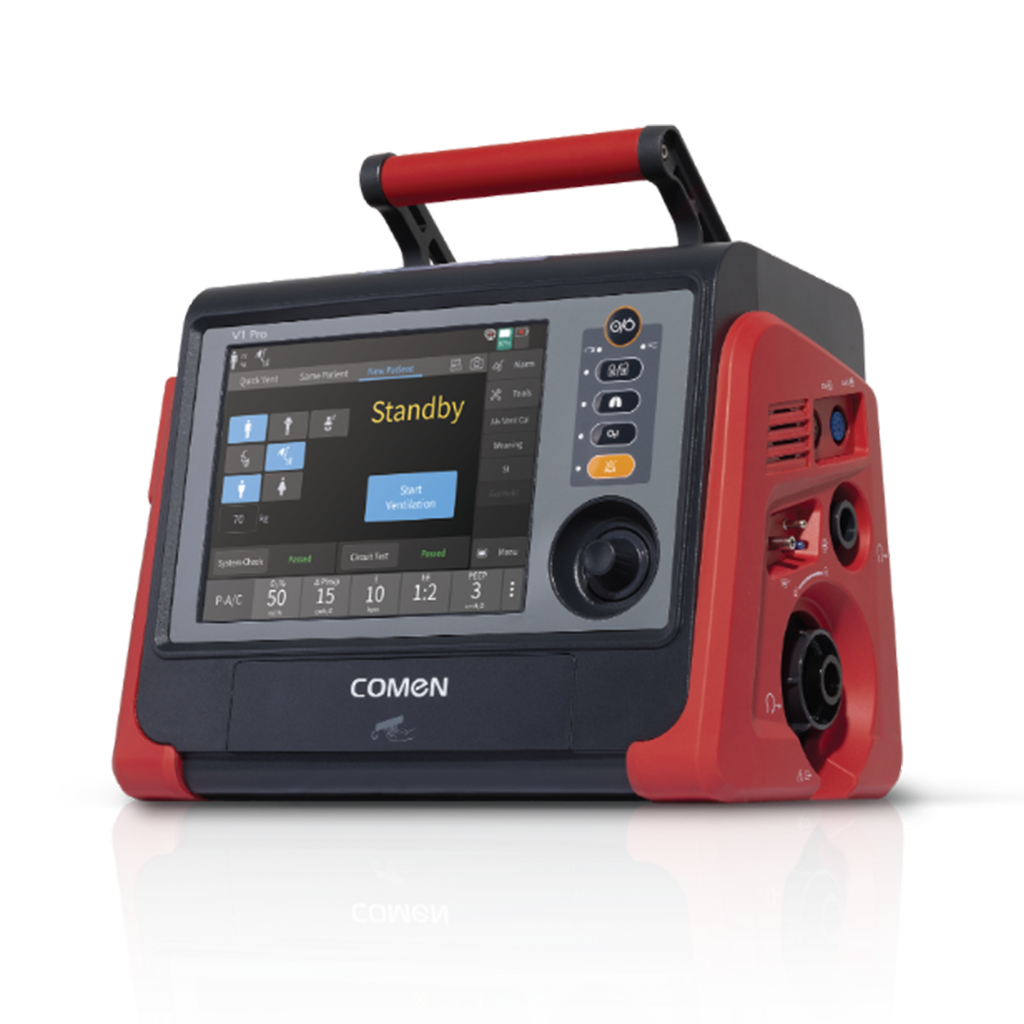
Essential clinical procurement guide for ICU ventilators in Kenya, evaluating invasive and non-invasive ventilation modes, turbine versus compressor gas delivery, and biomedical service longevity.
Critical care ventilation requires equipment that combines sophisticated lung-protective ventilation algorithms with rugged mechanical reliability capable of operating continuously in demanding healthcare environments.
Selecting an ICU ventilator in Kenya requires evaluating beyond upfront hardware cost—focusing on turbine air-generation independence, lung-protective ventilation modes (PRVC, APRV), consumable compatibility, and certified biomedical service availability in East Africa.
Critical Care Ventilation Needs Across Kenyan Healthcare Levels
The clinical requirements for mechanical ventilators vary significantly based on patient acuity and hospital infrastructure:
- Level 4 Sub-County Hospitals & Emergency Rooms: Need versatile transport and basic ICU ventilators that function reliably with standalone oxygen cylinders and internal turbine air generation, accommodating adult and pediatric resuscitation.
- Level 5 County Referral Hospitals: Require full-featured intensive care ventilators with comprehensive invasive and non-invasive modes, high-flow oxygen therapy (HFNC), and integrated weaning analytics.
- Level 6 National Teaching Hospitals & Specialized Cardiac/Trauma Units: Require advanced critical care ventilators offering esophageal balloon pressure monitoring, volumetric capnography, automated recruitment maneuvers, and neonatal micro-tidal volume delivery down to 2 mL.
Core Ventilation Modes & Lung-Protective Strategies
Modern critical care protocols prioritize preventing ventilator-induced lung injury (VILI), barotrauma, and volutrauma through intelligent mode selection:
- Volume-Controlled Ventilation (VCV): Delivers a guaranteed tidal volume (6–8 mL/kg predicted body weight) with set peak flow rates, ideal for initial patient stabilization.
- Pressure-Controlled Ventilation (PCV): Delivers a preset inspiratory pressure with decelerating flow waveforms, protecting non-homogeneous lungs with low compliance.
- Pressure-Regulated Volume Control (PRVC): Dual-controlled hybrid mode that delivers the target tidal volume using the lowest possible airway pressure, dynamically adjusting breath-by-breath.
- Airway Pressure Release Ventilation (APRV): Biphasic pressure mode with prolonged high pressure time (Thigh) and short release time (Tlow) that promotes alveolar recruitment in severe Acute Respiratory Distress Syndrome (ARDS).
- High-Flow Nasal Cannula (HFNC): Delivers heated and humidified oxygen-air blends at flow rates up to 60–80 L/min, washing out anatomical dead space and providing low levels of positive end-expiratory pressure (PEEP).
Gas Source Independence: Turbine vs Central Compressor Systems
Infrastructure constraints across East African healthcare facilities make gas delivery mechanisms a decisive procurement factor:
- Turbine-Driven Ventilators: Feature internal high-performance electric blowers that generate high-flow medical air directly from room air. They require only a high-pressure or low-pressure oxygen source, operating completely independently of central medical air compressors. This provides unmatched resilience during central plant failures.
- Pneumatic Compressor-Driven Ventilators: Require continuous central pipeline compressed air at 4 bar (50 psi). In facilities without reliable central compressor redundancies, external mobile air compressors must be purchased, increasing maintenance complexity and noise in the ICU.
Consumable Lifecycle & Filter Standardization
The long-term operating cost of an ICU ventilator is heavily determined by consumable accessories:
- Dual-Heated Wire Breathing Circuits: Prevent condensation (rain-out) in ventilator tubing when paired with active heated humidifiers, significantly reducing ventilator-associated pneumonia (VAP) risks.
- Bacterial-Viral Electrostatic & HEPA Filters: Positioned at the inspiratory and expiratory ports to protect both the patient and the ventilator's internal flow sensors from pathogen contamination.
- Flow Sensor Technology: Reusable autoclavable differential pressure flow sensors reduce ongoing operating costs compared to fragile disposable hot-wire sensors.
- Closed Tracheal Suction Systems: Enable deep airway suctioning without disconnecting the patient from the ventilator, maintaining continuous alveolar recruitment and PEEP.
Biomedical Calibration, Preventive Maintenance & Warranty
Routine biomedical engineering support is non-negotiable for mechanical ventilation:
- Oxygen Sensor Calibration: Checking and calibrating chemical galvanic fuel cells or paramagnetic sensors at 21% room air and 100% O2 to ensure delivered FiO2 matches clinical orders.
- Annual Preventative Maintenance (PM) Kits: Routine replacement of expiratory valve diaphragms, internal bacteria intake filters, battery packs, and pneumatic seals at 5,000 to 10,000-hour operational milestones.
- Authorized Engineering Support in Nairobi: Nairobi Enterprises Ltd provides factory-trained biomedical engineers across Kenya, offering emergency service dispatch, routine calibration, and genuine replacement parts.
Frequently Asked Questions (Ventilator Sourcing Kenya)
What is the advantage of a turbine-driven ventilator in Kenyan hospitals?
Turbine-driven ventilators generate their own medical-grade compressed air internally from ambient room air. This eliminates the need for expensive, noisy central air compressors or compressed air pipelines, allowing the ventilator to operate in any ward or ICU with only an oxygen cylinder or concentrator.
What ventilator modes are essential for adult and pediatric ICUs?
Essential clinical modes include VCV, PCV, SIMV (with pressure support), PRVC, non-invasive ventilation (NIV/CPAP), and high-flow nasal cannula (HFNC) therapy. Having an integrated nebulizer port and apnea backup ventilation is standard for patient safety.
How do healthcare providers in Kenya maintain compliance with ventilator regulations?
Ventilators in Kenya must be registered and approved by the Pharmacy and Poisons Board (PPB), adhere to IEC 60601-1-12 medical electrical standards, and undergo annual electrical safety testing and volume/pressure calibration verified with calibrated gas flow analyzers.
Explore Nelent's equipment ↗